
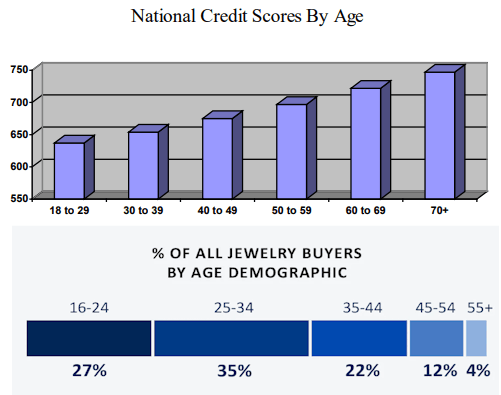
IndustryJewelers.Com (IJ) is an online jewelry finance company carefully structured to selling selected merchandise via multiple influencer campaigns that are directed to an identifiable and specific targeted audience. By merchandise we mean natural diamond, lab grown diamond, colored gemstones, karat gold, platinum, tungsten, silver, and includes engagement rings, anniversary rings, wedding bands, bracelets, necklaces, earrings, and pendants. The IJ primary client focus is on Gen Z and Millennial's in the 18 to 44 year old age group, and more specifically to those with low or no credit histories, and preferably a desire to rebuild and improve their FICO scores. This approach for selling jewelry is not new with regards to the financing and service reporting aspect, but that feature in conjunction with influencer campaigns that bring passionate engagement from both clients and inspirational advocates does introduce an exciting new twist to the mix. The numbers confirm the popularity of jewelry among young adults, as the 18-44 age group constitutes 84% of all jewelry purchases in the world. As it turns out, the largest demographic in need of credit repair services is also the 18- 44 year old age group. Wonderfully, IJ's credit reporting services will benefit these jewelry enthusiastic people the most.
Influencer marketing is a marketing strategy involving a brand and content creator collaborating to promote a product, service, or the brand itself on social media. To clarify, a social media influencer is an individual who produces a continuum of content, information, or various material in the form of a video or media post. Usually these personalities are famous celebrities, or professional experts in their field of work, while some are just regular people being fun and entertaining. People love to associate, follow, and interact with the activities these content makers produce. The important point from IJ's perspective is many of the trust issues and barriers traditional jewelers face are minimized by the relationship followers develop with their influencers. This leads to both higher engagement and consequently conversion rates when products are promoted through social media. An influencer's engagement rate is a ratio representing the degree of commitment between an online audience and the creator's content. So an engagement refers to activities such as likes, shares, comments, talkback, etc., but does not escalate to a purchase or sale. An influencer's conversion rate is the rate that followers respond with a “Call To Action” (CTA) button, and complete a purchase of goods. IJ will use the conversation rate for projections when available. However, the engagement rate multiplied by the established conversion rate for online jewelry sales can also serve as a reasonable projection of potential revenue, (usually a lower number). This is the methodology used in this document.
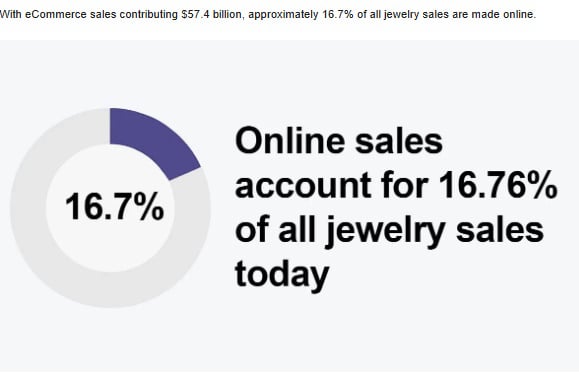
TikTok alone had roughly 106,000 influencers in 2020, and it’s a relatively new platform. Instagram has at least five times this number, and chances are YouTube has five times that. Some estimates put the number at upward of 50 million influencers and creators worldwide. Marketers are seeing the opportunity to piggyback on the sway that creators hold with their followers to sell goods. After all, 90% of consumers are more likely to trust recommended brands, even if strangers are the ones recommending them. Enter influencer marketing and, soon after, the rapidly expanding digital economy. In 2021, approximately $3.7 billion was spent on influencer marketing in the U.S., an increase of 33% from 2020. Online sales continue to grow reaching 57.4 billion in 2021 with 16.7% or 9.6 billion dollars traded over the e-commerce platforms.
In the traditional jewelry store a merchandiser selects and invests in a collection of fine jewelry product lines in an inventory that generally runs $250K to $1M. These stores have a very low turn on that inventory, usually less than one. The product mix invariably contains styles that have aged and grown out of style over time, and usually accounts for at least 35% of the product on display. Most of these entities are further entrenched with marketing and advertising schemes that have over the past decade grown outdated. IJ solves the merchandising problem by promoting specific pieces of jewelry through selected influencers, and it is those items that make up the bulk of inventory dollars. So for the most part, IJ is limiting the inventory selection to a collection of styles only if those items are in collaboration with an influencer. IJ does augment and enhance some categories such as earrings and pendants with look-a-like stylings based on an influencer campaign item. The selection is also refined from a pricepoint perspective as well, staying away from high dollar articles that require higher levels of trust, confidence, and financing issues that inject barriers to a sale. Wonderfully, this approach makes for easier data analysis, and maneuverability, and allows for greater predictability with the inventory investment particularly at scale. This advantage should manifest itself with higher turns and bigger profits.
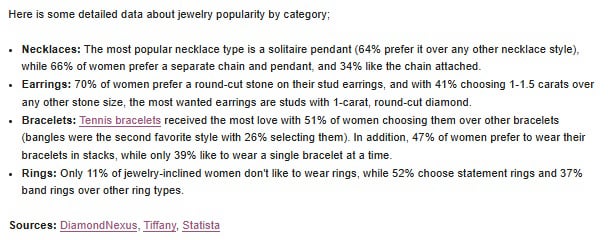
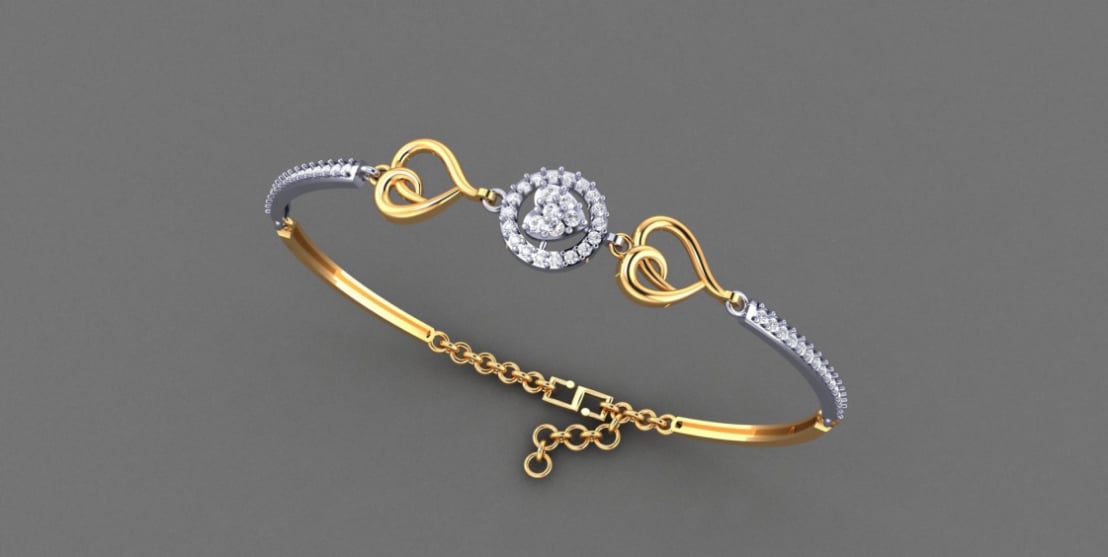
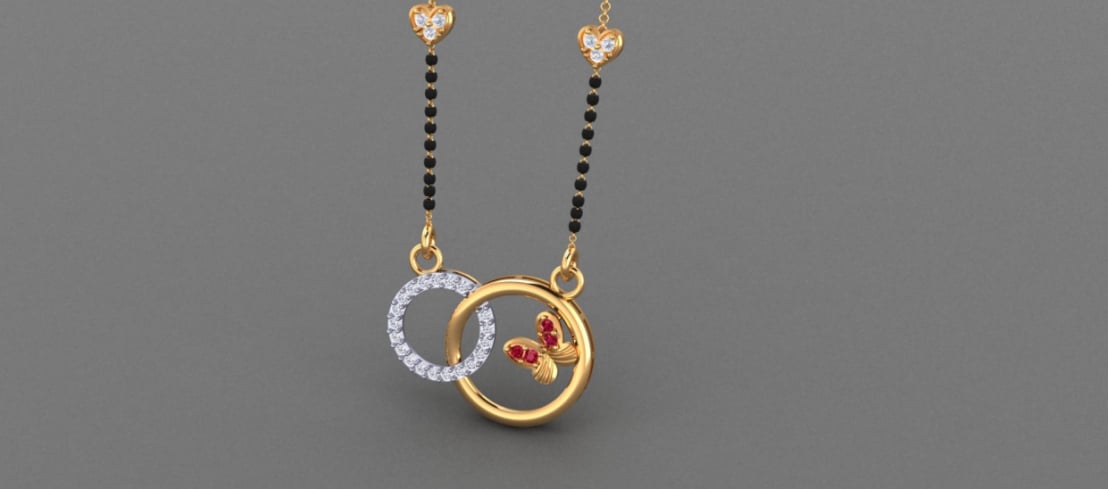
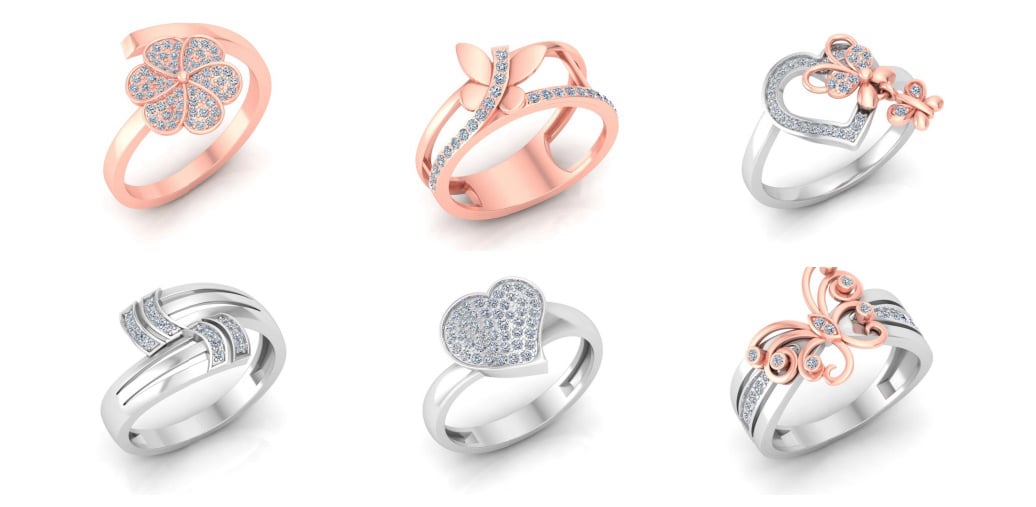
Rings are a difficult product to sell online because people cannot really try them on. Various gimmicks have been tried by using a simulated hand for example. It is IJ's view that most folks will visit a brick and mortar store for that purchase, especially in the higher dollar price point. So our focus and selection will be on earrings, necklaces, bracelets, and rings, in that order. Pricepoint from $300 to $2000 with 80% at or under $1200 retail.

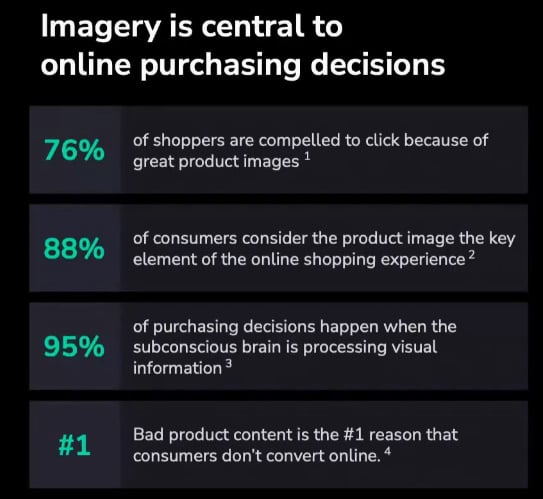
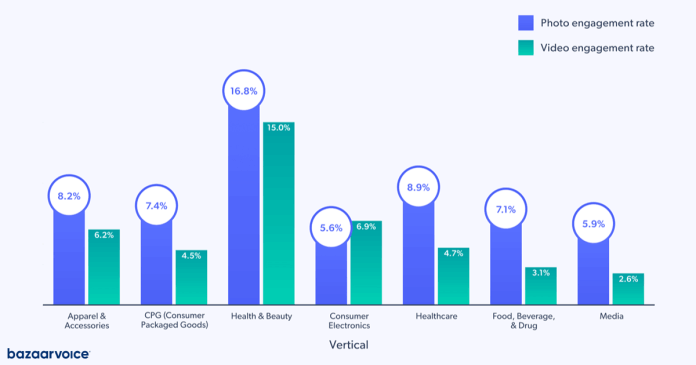
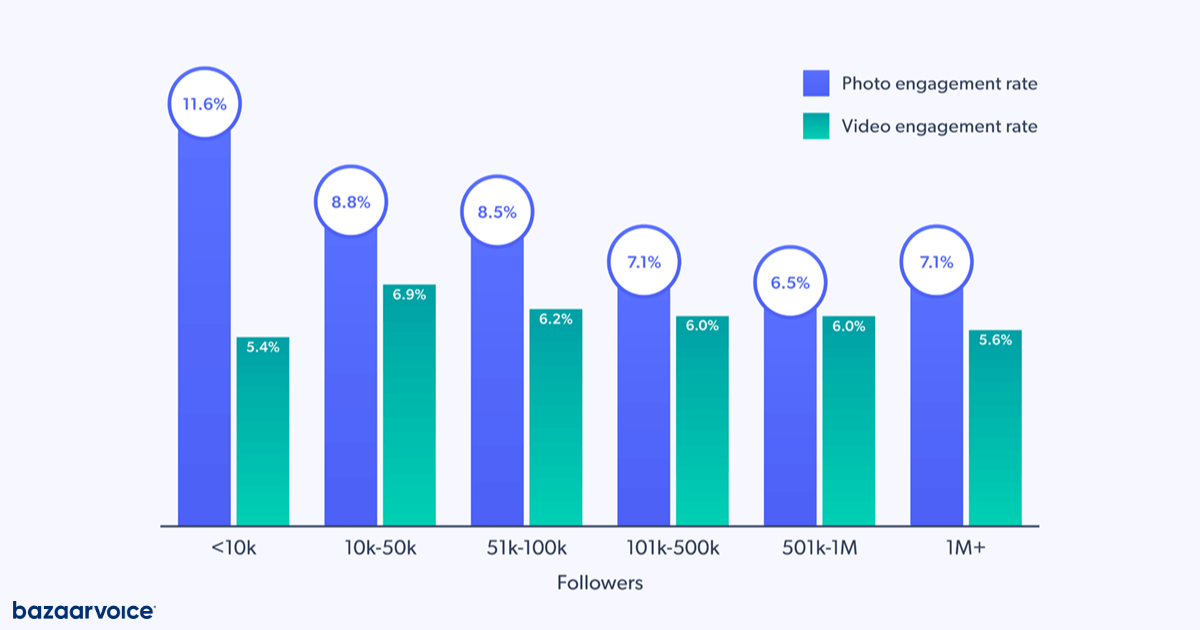
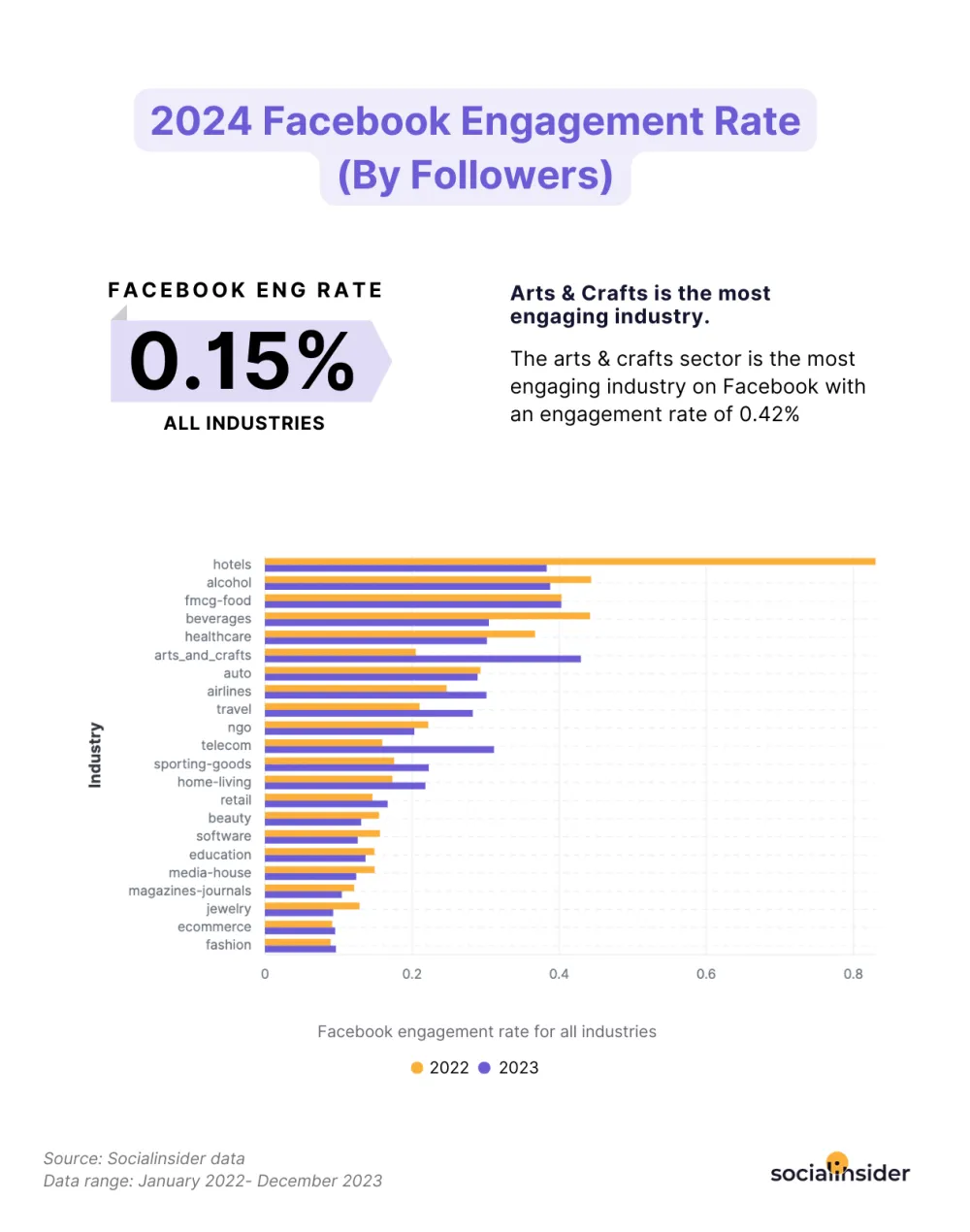
Here we see the engagement rate by followers once again illustrates the importance of good photos over videos. The cost of quality and winsome photos being far cheaper to produce than most video projects is relevant. Also note the higher engagement rates with nano and micro influencers as well. This suggests IJ can utilize the less expensive and contractual benefits of influencers in the 100K and lower ranges. IJ believes an investment in good photography equipment and the related editing software is demanded by this data.
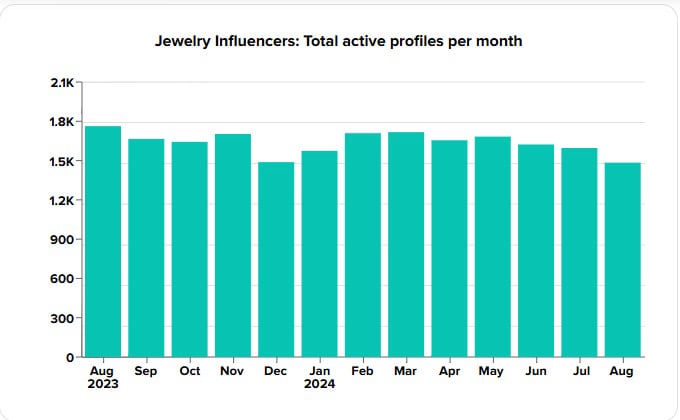
The total number of unique Profiles that posted at least once based on the keywords and phrases used to identify influencers in the jewelry category is relatively small. In the first 8 months of 2024 the average number of jewelry influencers is 1626 unique profiles.
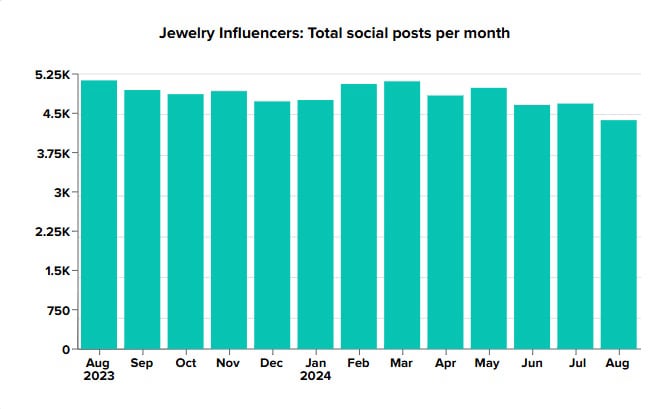
Total social posts is the total number of posts from all Creators in the jewelry industry. In the first 8 months of 2024 jewelry influencers have posted 38,460 posts with an average of 4808 posts per month. So we have 4808 posts from 1626 influencers or slightly less than 3 posts per influencers per month.
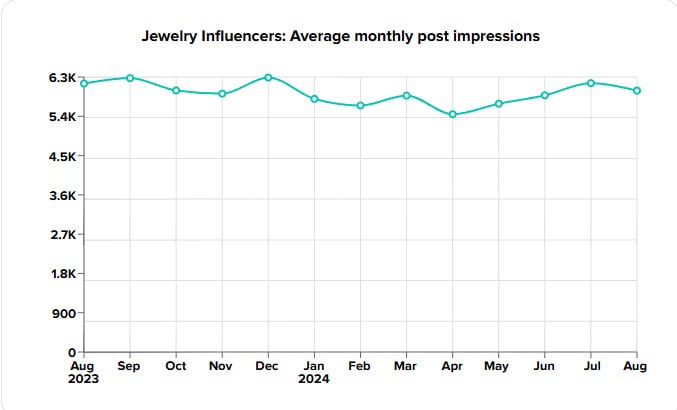
Total audience size is defined as the sum of impressions from posts where impressions is the number of times the audience has viewed the post. Note, influencers post just under 3 posts per month suggesting each post would be 1/3 in size. This lines up with other data from other sources as shown in the Financials below under "Impressions." So over the first 8 months of 2024 the average is 5810 monthly impressions per post. IJ insist these numbers continue to reflect the importance of the image quality as discussed above.
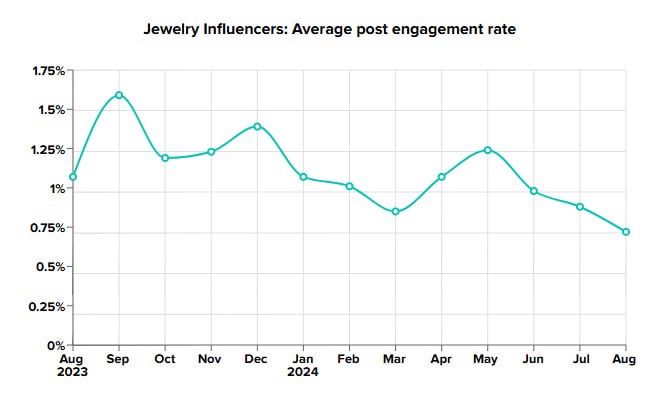
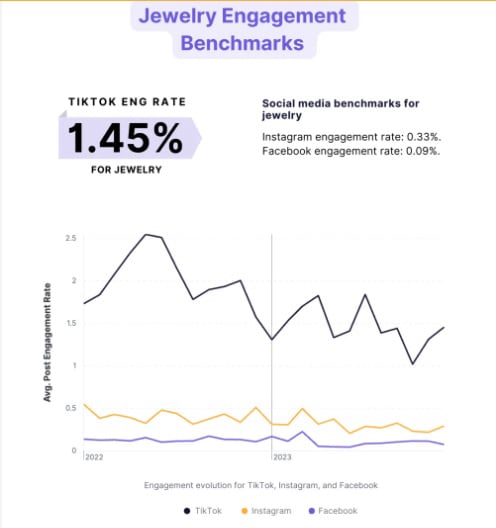
Engagement rate is the percentage of an audience that has engaged with each influencer post by liking, commenting or sharing. Over the last 12 months the average post engagement rate is 1.10% for jewelry. The following engagement rates by month are used for the sales projections in this document.
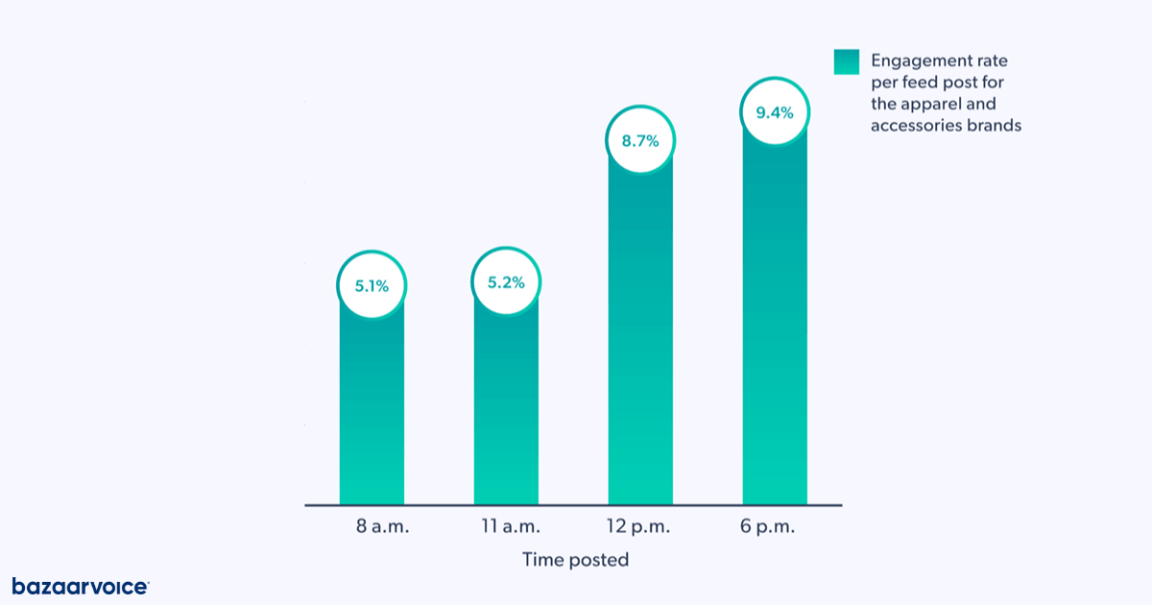
Interestingly, the time of day a post is placed has an enormous effect on engagement rates. Clearly noon and 6 p.m. are advantageous and should be adhered to. Contracts with influencers should include this caveat.
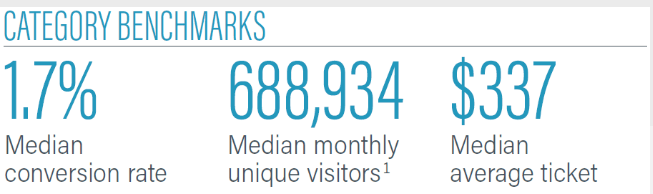
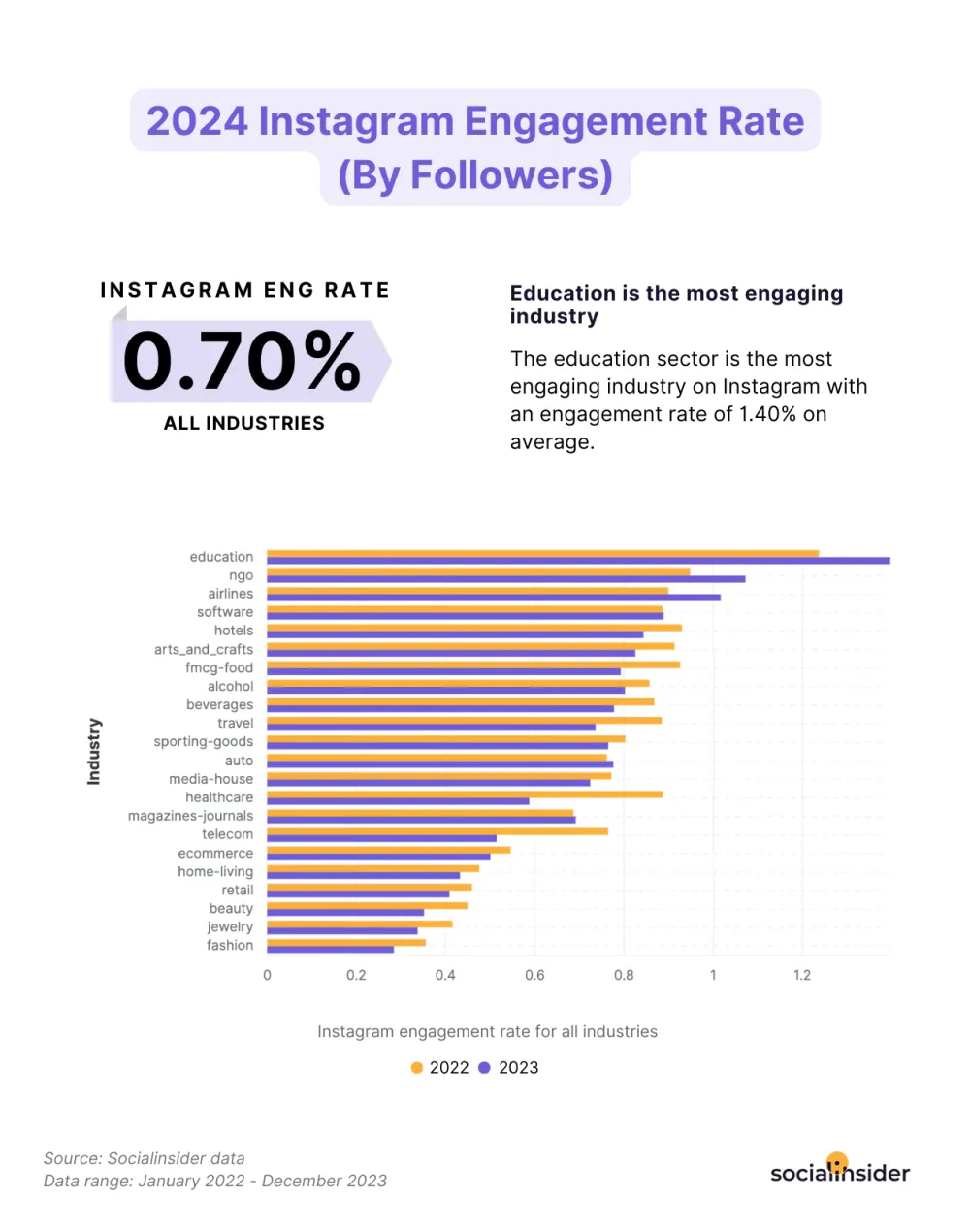
Conversion Rate is the percentage of total visitors to your website who convert. Depending on the business goal, conversion can be making a purchase, subscribing to a newsletter, or signing up for a product trial. The average Conversion Rate for the top-performing brands on Instagram that we analyzed is 1%. Similar to last year’s findings, brands with smaller followings have higher conversion rates than brands with 1M+ followers. Interestingly, brands with the second-highest tier of followers, 501K to 1M, have the same conversion rates as brands with the least followers this year. Brands with fewer than 10K followers, as well as brands with 501K to 1M followers, have the highest Conversion Rates (1.3%), followed by brands with 10K–50K followers (1.2%). This data is for Instagram only.
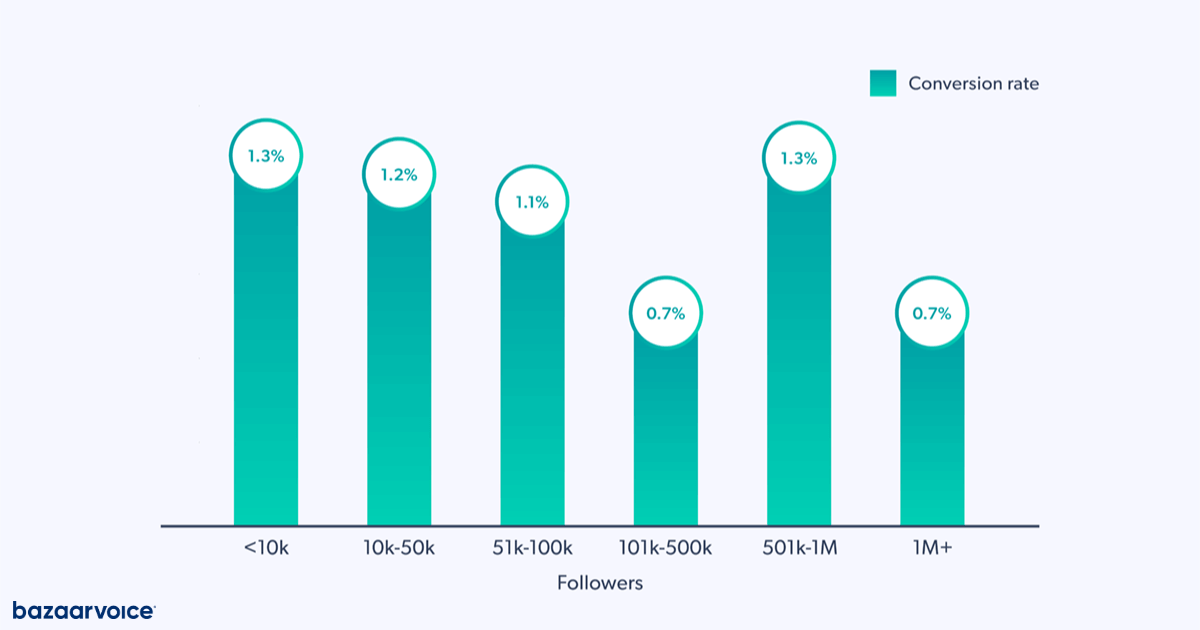
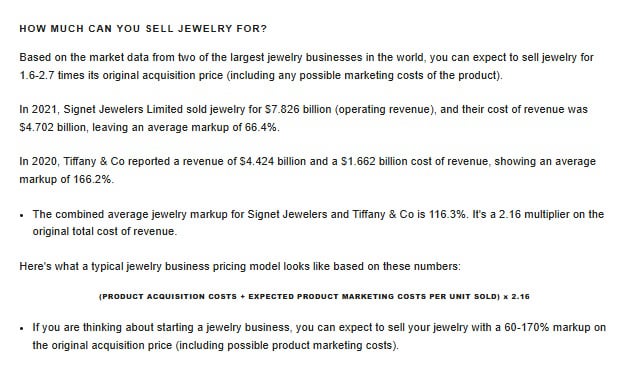
In light of the above Instagram conversion rate data, specific analysis within the jewelry trade domain have set the following benchmarks. This is the data used for the projections in this document as they are the particulars for online jewelry sales that were formulated and earmarked within the jewelry trade centers itself. IJ believes their median average ticket price can be even higher as discussed in the financing section below.
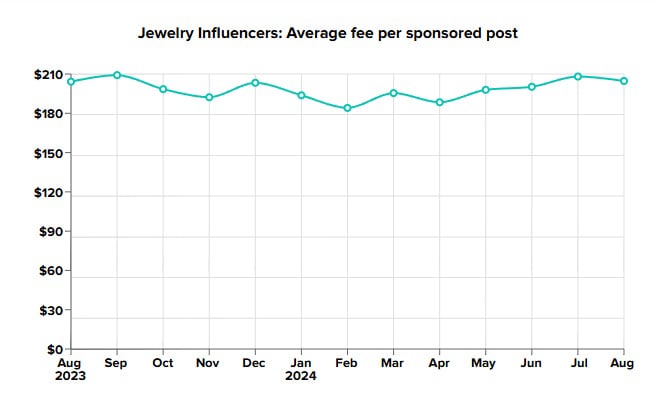
Estimated fee is a projected compensation for each post calculated based on the media type, platform and the audience size of the influencer profile. The result for the survey is $197.83 per post over the past 12 months.
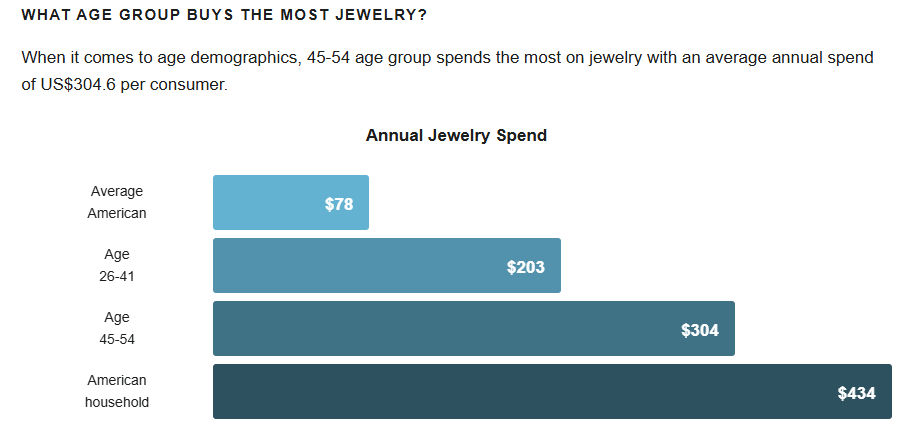
Here we see the average price paid for jewelry by age grouping. This data lines up fairly close to the Jewelry Benchmarks above. Since this is IJ's targeted customer demographic, we will use the average median ticket price of $337 for all sales projections in this document. IJ believes that since this median price is an annual spend and a $360 down payment qualifies for a $1200 purchase through the IJ financing program, we should be able to achieve some upsell potential under a low monthly payment schedule.
Many folks in the IJ target group do not have the means or financial history to purchase the jewelry they desire in full. Recognizing this as an opportunity, IJ has made internal credit financing an integral part of the business structure. The added risk of default requires a slightly higher (4 time) markup then some online companies who do not offer such services, but the markup is not out of line with other traditional mall stores. As an added bonus to the customer, IJ reports to the credit houses to help many young folk build or rebuild their credit FICO scores. The IJ 4 key markup is competitive in the trade when you look at the entirety of the deal because most people are still using some form of payment plan with added financing charges. IJ requires a 30% down payment and then monthly payments over 24 months at 36%APR. Under this program a $320 purchase has a $96 down payment and 24 payments of $11.63. Likewise a $1200 purchase has $360 down payment and 24 payments of $49.60.
Using all the assumptions discussed in this document IJ has created the following spreadsheet as a basis for our projections. We also used a preliminary influencer following of 2,500,000.
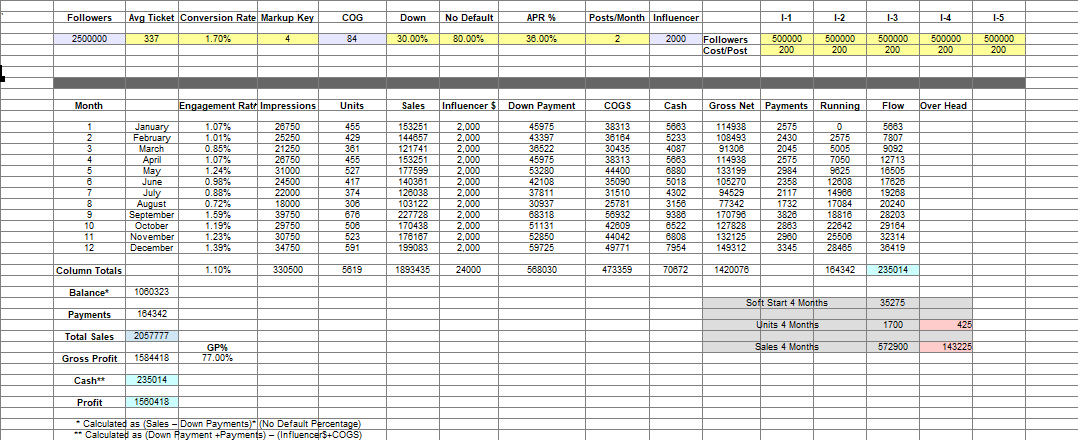
Projections
As with every startup the first few months is spent stabilizing and refining our processes including data gathering systems that work in concert with our sales marketing campaigns. We believe it is intelligent to initiate a soft start program to ramp up the sales and manufacturing for that reason. By limiting the number of impressions we can move slowly to build a solid foundation. So Industry Jewelers feels a soft start at 20% or around 500,000 followers makes good sense. We feel a 4 month contingency should complete the Soft Start program. Below we see the result of the spreadsheet using 500,000 followers over one year.
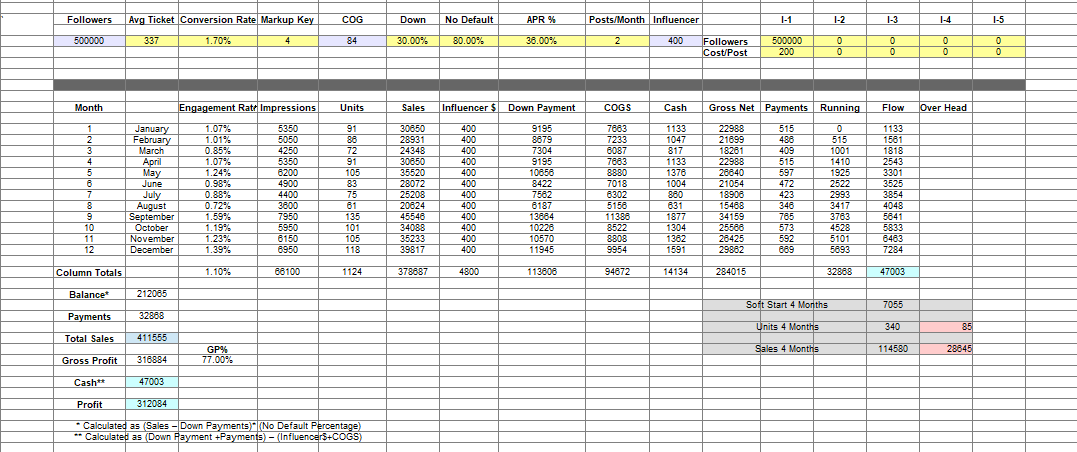
500,000 Followers
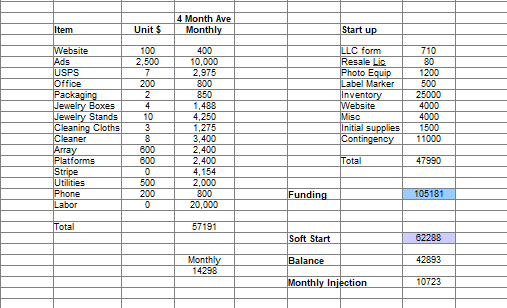
Start up cost are $47,900 for the initial business structure. Monthly expense estimates projected over a 4 month average at 85 units sold for 500,000 followers. These are $14,298 per month making the Soft Start required dollars at $62,288. Total funding sits at $105,181. Note there is a $20,000 labor expense and a 25,000 initial inventory investment.
833.799.4653

You can use content blocks to arrange your articles, large texts, instructions. Combine these blocks with media blocks to add illustrations and video tutorials. You can use various content blocks to work with your text. Add quotations, lists, buttons. Select your text to change its formatting or add links. Mobirise is a simple website builder that helps you create amazing web pages without knowing any code.

Drag & Drop Website Builder